
Return, return . . . return again!
The practice of tenacity
Dear friends,
I could complete this post in just four words:
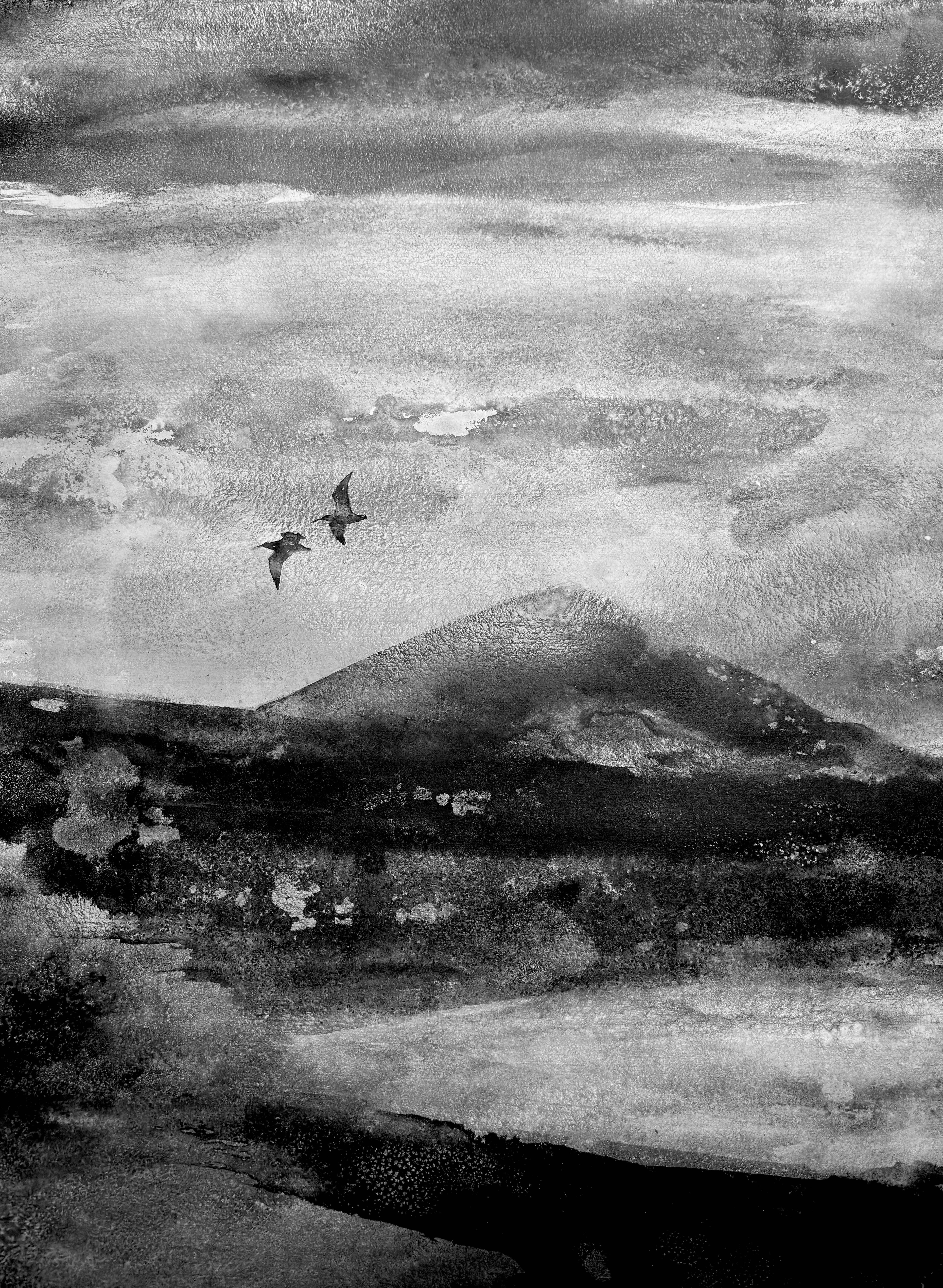
The Curlews Are Back!
But I like to try a little harder. This week I’ve written about the practice of return. It’s free for all, but for those who want to go a little deeper I’ve created a printable which you can use for a month-long practice of your own. This will be followed by a live video gathering for people who want to share their experiences.
The gods of winter and spring are battling it out. Strange fluctuations are taking place. Last week it snowed; this week I saw the first peacock butterfly. Celandines and wood violets are starting to flower. The birds are on the move.
I’ve only once seen curlews here in February before: a single bird passing over a high hill. Perhaps it had been blown in by a storm, or had taken a wrong turn at the Severn Estuary. I don’t think I saw another one that whole summer. This year, however, the conditions are excellent, particularly at Llangors Lake, twenty miles from here. The constant rain has caused the lake to swell into the surrounding fields and, as the water subsides, the ground has become soft and soupy. Perfect for curlews.
I made my first visit last week, on a hostile day of squalls, with families moping about near the car park trying to enjoy the school break. Heads down, children screaming for their iPads, and grannies sitting in cars desperately searching for the keys so they could drive themselves back home. It wasn’t a good day for a day trip.
I climbed over a stile into the wettest of fields, realising quickly that a wetsuit and snorkel would have been more useful than hiking gear. The mud almost got the better of me, but I trudged on, each of my boots accumulating an anvil’s weight in caramel-coloured gloop every five steps. I could see several birds in the distance browsing near the lake’s edge, but couldn’t quite make them out. I reached into my pack for my binoculars, then remembered I’d forgotten them. No choice but to trudge a little further, following slight rises in the grass until I reached a bewildered-looking tree surrounded by a sheep fence (yes, trees are full of bewilderment — they’re wild, after all).
A flock of sinister-looking Canada geese began to lumber across the field towards me. This was unnerving. I’ve had several run-ins with geese when we had a narrowboat on the River Avon. They’re aggressive, fearless things. They’ll approach you, necks pushed out, hissing like king cobras, then beat their wings to lacerate you with a primary feather. Knife fighters, the gangsters of the bird world. In fact, they may take over the whole globe someday, there are so many of them. Perhaps they already have. For all we know, the world’s presidents and prime ministers could be operated by geese using remote-control devices. This would explain why we are where we are.
For a few minutes I went into a panic as a single oystercatcher, oh wondrous thing, standing lonesome in the mire, praying for an early summer, was slowly surrounded by the geese. Was I about to witness a mass mugging? Actually, no. The geese had enjoyed their muggings earlier, because they passed the tiny, crimson-beaked beauty without even a sneer.
Then the curlews flushed, and the lake, the geese, the thousand or so ducks — even the great egrets perched in the trees like flags of surrender — disappeared. For me, when curlews appear, everything else disappears.
The strangest of strange. As the birds took off, low over the reeds, they took turns flipping upside down, raven-like. I’ve never seen curlews do this before; I had no idea they were also acrobats. In fact, I’m wondering now if I’d been hallucinating, the coffee that morning was strong. But no, I’m sure they did.
Ten curlews rising above the lake, turning and turning again. Over to the far side, along the reed beds, over the trees, and back, swerving as they approached, then disappearing into a parallel field, where they landed and continued to browse as if nothing had happened. I crept up to the hedge, peeped over the top, and they flushed again, this time emitting waup cries, one at a time. Out over the lake again, back again. I grabbed my camera, realised I hadn’t charged it, threw it into my pack, knowing that even if I had, I wouldn’t get a good shot of them in the appalling light. And so I crept along the hedge, trying to watch them through the gaps, just little brown blurs (I’d also forgotten my glasses). Once again they flushed, this time coming close, right over the top of the bewildered tree, which now looked even more bewildered.
And that was it. They flew off towards the mountains and disappeared.
Is there a practice here? Yes, there is.
J. A. Baker was a shy man who had a tame desk job for most of his life. But one winter, as he worked on his masterpiece, The Peregrine — probably the finest book about the wild that exists — he tracked peregrines all over the county of Essex, riding his bicycle from place to place. He suffered from terrible arthritis and must have been in pain for most of that time. But passion isn’t about wild leaps of inspiration, practised only by the young. It’s about tenacity, getting up before dawn and going out in the hammering rain, not knowing if you’ll encounter the object of your passion. Passion is about tending to the sick without hope of their recovery — or yours. Baker kept going, redrafting his book over and over, recording the stresses in every sentence, checking the music of his words, which had to complement the fierce music of falcons. He was writing at a time when farm chemicals were destroying swathes of the raptor population on these islands and he eventually died in his early sixties from the drugs that were used to treat his own illness. But he left behind a work which has inspired generations of readers.
I believe that tenacity, if you practise it, grows with age. It’s one of the gifts we’re given — this slow passion. The things that you love are out there. Go and find them. Wait in the rain, just for a glimpse.
This is the practice.
A Quiet Invitation
This spring, I’d like to try something new.
Each month, I’ll create a quiet field practice — something modest and embodied, like the one within this week’s curlew story.
For those who would like to step further in, I’ll share the practice as a printable field sheet. At the end of the month, we’ll gather for a live video conversation to speak about what returning to our places has revealed. This month, my own place will be Llangors Lake, and I’ll begin by sharing what I’ve found there.
The field sheet is available to download below.
Nothing grand.
Nothing performative.
Just a small circle keeping the practice together.
If that feels like something you’d value, you’re warmly welcome to join us as a paid subscriber.
Keep reading with a 7-day free trial
Subscribe to Into the Deep Woods to keep reading this post and get 7 days of free access to the full post archives.